
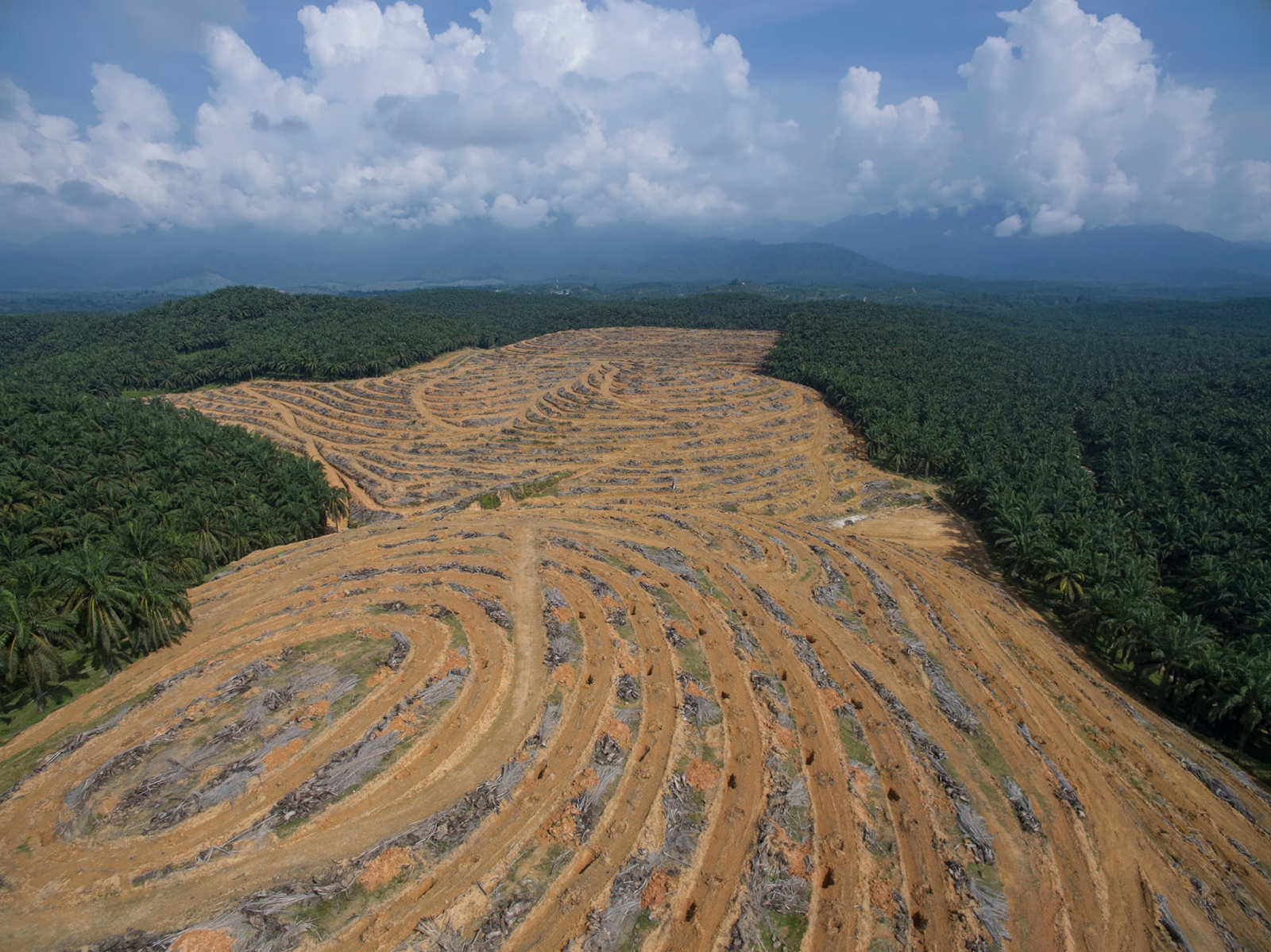
Photo credit: Pascal Maitre/Nat Geo Image Collection-SPI – An aerial view of cleared rainforest land where lucrative palm oil trees will be planted.
Biodiversity can be defined as the total variety of life on Earth, encompassing everything from plants and bacteria to butterflies and humans. Today, our planet is facing an unprecedented collapse in biodiversity, with species vanishing at an accelerating rate.
Beyond weakened ecosystems, biodiversity loss has wide-ranging consequences, including compromised food systems and increased risk of zoonotic diseases. The UK Government has even designated biodiversity loss as a national security threat, with the Government’s Integrated Review Refresh 2023 noting “climate change and biodiversity loss are important multipliers of other global threats”.
Biodiversity loss in numbers:
According to the WWF Living Planet 2024 Index, compiled by the Zoological Society of London (ZSL), wildlife populations declined by 73% on average between 1970 and 2020. This is based on about 35,000 population trends across 5,495 species of amphibians, birds, fish, mammals, and reptiles. To put this figure in perspective, nearly three-quarters of monitored wildlife populations have disappeared over the span of five decades, or two human generations.
Globally, the catastrophic decline in wildlife populations is driven by human activity. Agricultural expansion, deforestation, and urbanisation cause habitat loss and degradation. Overexploitation through unsustainable hunting and fishing decimates wildlife populations. Invasive species introduced through global trade eclipse native fauna and disrupt ecosystems, while diseases exacerbated by habitat fragmentation can lead to sudden population collapses. Pollution from fossil fuels, agricultural runoff, and industrial chemicals contaminates ecosystems and directly harms wildlife. Overlaying all these threats is climate change, which alters habitats, disrupts seasonal patterns, intensifies extreme weather events, and pushes vulnerable species toward extinction.
Regionally, the worst losses were observed in Latin America and the Caribbean, with a staggering 95% decline. This near-total collapse reflects the devastating combination of deforestation in the Amazon rainforest, agricultural expansion, mining operations, and infrastructure development that have fragmented and destroyed critical habitats. Indigenous territories, which have historically served as biodiversity hotspots, are increasingly threatened by illegal logging, land grabbing, and resource extraction. Out of all groups, freshwater species experienced the greatest collapse (85%). Rivers, lakes, and wetlands, which cover less than 1% of Earth’s surface yet support nearly 10% of all known species, have been particularly vulnerable to pollution, water extraction, and the introduction of invasive species.
The path forward:
There is still time to reverse current trends and avert further loss. In fact, there is some good news regarding global conservation projects: recent studies show that such efforts, notably hatching Chinook salmon and eradicating invasive algae, have slowed and, in some cases, reversed biodiversity loss. To truly meet the moment, however, radical alterations to our current approach to conservation and resource extraction will have to be made. These changes include:
- Protecting and repairing ecosystems: Expanding protected areas and conservation projects, as well as restoring damaged ecosystems, can help preserve and revitalise biodiversity.
- Diminishing waste and pollution: Introducing measures to reduce waste generation, increase recycling, and minimise the release of pollutants into the environment can mitigate the strain that pollution places on ecosystems and the species inhabiting them.
- Addressing climate change: Transitioning from fossil fuels to renewable energy sources, mitigating greenhouse emissions, improving energy efficiency, and maintaining and restoring carbon sinks, such as forests and wetlands, are key actions to tackle climate change and biodiversity loss.
- Adopting sustainable agriculture and forestry practices: Practising agroecology, agroforestry, and other forms of sustainable farming can help safeguard biodiversity while meeting food production needs. Likewise, sustainable forestry methods, such as reduced-impact logging and the certification of sustainably harvested timber, can help diminish the impact of timber extraction on biodiversity.
- Promoting sustainable consumption and production: Encouraging more ecologically responsible consumption habits and the adoption of circular economy principles can help curtail demand for natural resources and minimise the environmental impact of production processes.
- Empowering indigenous peoples and local communities: Indigenous peoples and local communities worldwide have long been successful protectors of biodiversity. Recognising and supporting their rights, knowledge, and conservation practices can contribute significantly to global biodiversity conservation efforts.
- Reinforcing international cooperation and climate leadership: Biodiversity protection necessitates global cooperation, with nations working together to establish and enforce conservation policies, share resources and knowledge, and promote sustainable development.
Biodiversity loss is a crisis that calls for both transformative and urgent action. The recent news that humanity has failed to limit global heating to 1.5ºC must give us impetus to act now. By transforming our approach to conservation and resource extraction, we can protect the countless species that share our planet and the ecosystems upon which we depend.
Author: Eva Morisot