

Karina Ponton
22 October, 2025
Across the world, farmers are rethinking how food is grown. As climate extremes intensify and soils degrade, a quiet revolution is taking root — one that looks not to high-tech “climate-smart” fixes, but to the wisdom of the land itself. Agroecology is the key to feeding the planet, while healing it.
Industrial agriculture — reliant on fossil fuels, chemical fertilisers and monocultures — is one of the biggest drivers of global heating, responsible for up to 40% of global greenhouse-gas emissions. The UN warns that this system is “pushing the planet beyond safe ecological limits,” threatening food security for billions. By mid-century, up to 1.2 billion people could be displaced by climate-related disasters, many of them smallholder farmers.
Agroecology offers an alternative rooted in ecology and equity. Combining scientific insight with traditional knowledge, it promotes crop diversity, soil regeneration and low-input farming. The UN Food and Agriculture Organization calls it “an integrated approach to sustainable food systems,” capable of reducing emissions while enhancing resilience. Small-scale farmers — who make up 95% of the world’s farms — already produce around 70% of global food, often on fragile land and with little support.
Movements like La Via Campesina, representing more than 200 million farmers, have built agroecological schools and training networks that empower communities to share knowledge. In India, centres such as Amrita Bhoomi have trained thousands in low-cost, regenerative farming, restoring soil fertility and freeing farmers from debt. These grassroots successes demonstrate agroecology’s potential — but scaling them up requires funding.
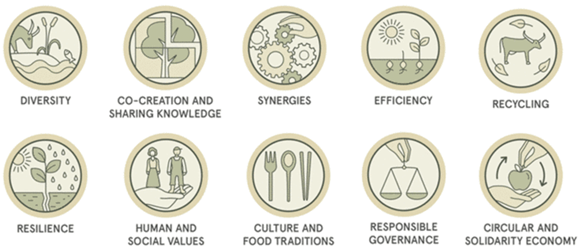
Figure 1. The ten elements of Agroecology
Table 1. Specific examples of agroecology on the ground
| Category | Key Strategies / Actions |
| Land Use & Forest Conservation | Stop agricultural land expanding into forests; Global land use regulations; Tax production in important forest areas; Conserving Forests; Afforestation; Agroforestry and Silviculture; Stopping Degradation; Maintaining Existing Area; Converting Areas of Land; Newly-Created Areas |
| Food Production & Agriculture Efficiency | Reduce biofuel production and support; Reduce support for inefficient production; Ban factory farming; Training on agroecological livestock farming; Local Animal Feeds; Optimizing Feeding Regimes; Managing Pasture; Feeding Waste Food; Decreasing Stocking Density; Mixed farming systems |
| Food Supply Chains & Consumption | Reduced food transport; Local food strategies; Direct supply chains; Reduced packaging and food waste; Peri-urban food production; Side policies to promote seasonal consumption; Support for fruit and vegetable producers; Public education on meat production systems |
| Soil Health & Nutrient Management | Composting Animal Manures; Targeted manure application; Reducing Run-Off; Support for Composting; Reducing Disruption, Degradation, Pollution; Optimizing Nutrient Use; Increasing Sequestration; Shallow Tillage; Cover Crops; Green Manures; No Overgrazing; Growing Cover Crops; Increase Organic Matter; Building Soil Fertility; Improving Soil Structure; Increasing Root Growth |
| Biodiversity & Genetic Resources | Increasing Biodiversity; Seed Banks; Collaborative Seed Breeding Programmes; Hardy, Adaptable Animal Breeds; Farmer Autonomy; Restrict Patenting of Genetic Resources |
| Integration of Agriculture & Ecology | Wildlife and Livestock; Biomass and Timber; Growing Perennials; Growing Legumes; Using Crop Rotations |
Financing the Roots of Change
Despite agriculture bearing 25% of climate-related losses, just 3% of global climate finance goes to the sector, and less than 2% supports small-scale farmers. Instead, billions are channelled into industrial “climate-smart” projects and carbon offset schemes that deepen inequality. Advocates argue that funds should instead flow to those already cooling the planet through agroecological practice.
Two key mechanisms under the UN climate framework — the Adaptation Fund and the Loss and Damage Fund — could provide that support. Together, they finance resilience and recovery projects for communities hit hardest by climate change. Redirecting even a fraction of this funding to agroecological training networks, seed banks, and soil restoration could transform rural economies while cutting emissions.
Activists are pushing governments and civil society to demand that these funds prioritise farmer-led solutions. They’re calling for simpler application processes, lower funding thresholds, and equitable access for grassroots organisations, Indigenous communities, and women farmers.
As climate chaos threatens global harvests and food prices surge, agroecology stands out not just as an environmental fix but as a justice movement — restoring power, knowledge and resources to those who feed the world. Supporting it, campaigners say, is not charity but survival: an investment in a future where both people and planet can thrive.
Flotilla4Change, Agroecology and COP30
Many of the members of Flotilla4Change are farmers, landworkers and seaworkers. We practice agroecology in our livelihoods, teaching these practices on-farm, with our peers and with the next generation. During COP30, delegates and activists from Flotilla4Change will be strategising, meeting other delegates officials, and calling for Agroecology as a solution to climate change. We will demand increased finance through the Adaptation Fund and the Loss and Damage Fund. As a sign of solidarity, Flotilla4Change have committed 10% of our net income for this financial year to the Loss and damages fund / directly to Earth Defenders / indigenous communities. Want to get involved? Join the journey > Join the community. Link in bio.
You can find out more on Agroecology, activism and direct solutions below.
An activist guide to leveraging finance for Agroecology
Food-Farming-and-the-Climate-Crisis